
Dental Implants Fredericksburg
Reliable Prosthetics Designed to Last a Lifetime
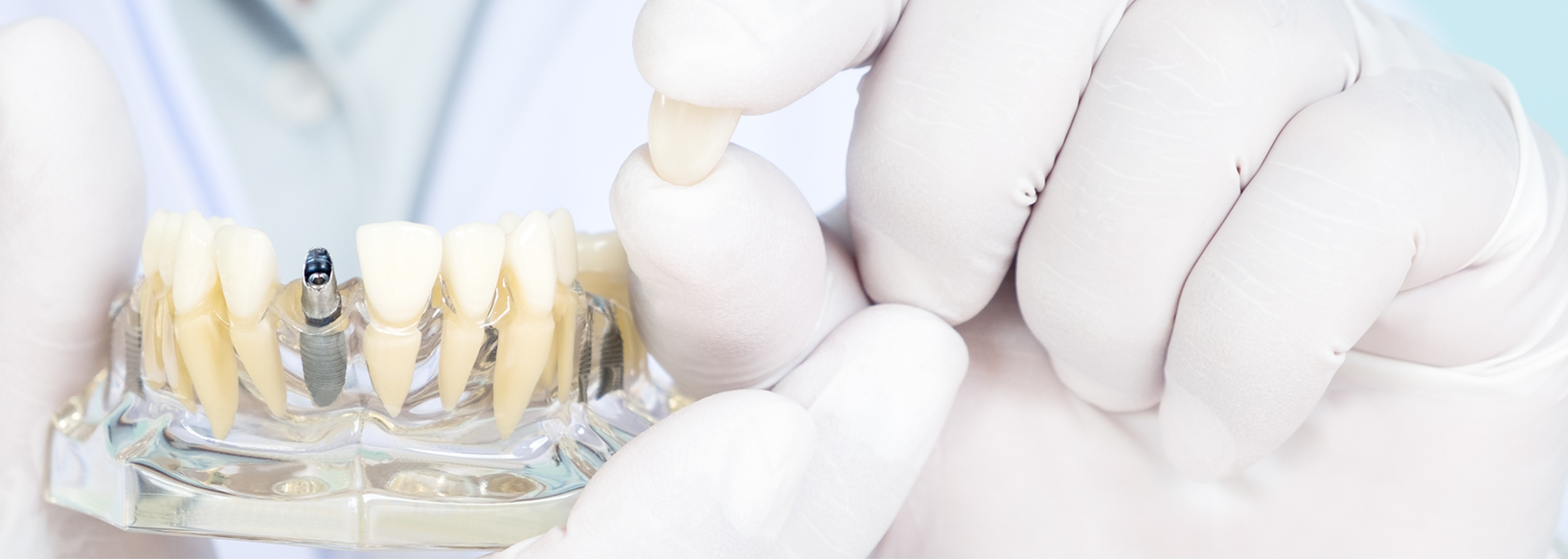
When comparing dental implants to dentures or dental bridges, there is one distinct difference – one extends beneath the gumline while the other two remain above. While all three restore the visible portions of your smile, dental implants in Fredericksburg also replace your missing tooth roots. At Kovar Dental, we partner with local dental implant specialists for placement and offer complex treatment options, including implant dentures and All-On-4. Let us help you find the right solution for your new smile by calling us to schedule a consultation.
Why Choose Kovar Dental for Dental Implants?
- Partnering with Dental Implant Specialists for Surgical Placement
- All-On-4 & Implant Dentures Available
- Dentists Committed to Creating a Welcoming & Comfortable Space
What Are Dental Implants?
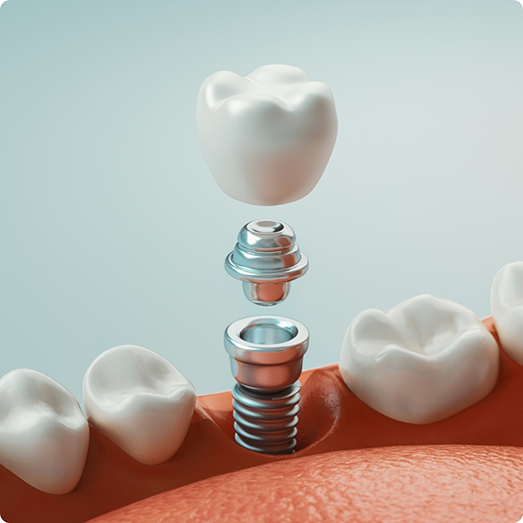
Similar in appearance to a small screw, a dental implant can be crafted from titanium and placed within the jawbone to create a sturdy foundation that supports a dental crown, bridge, or denture. Their ability to stimulate the underlying bone minimizes the risk of facial sagging and additional tooth loss over time, and they restore significant bite force that eliminates food restrictions. The best part is they have the potential to last a lifetime.
The 4-Step Dental Implant Process
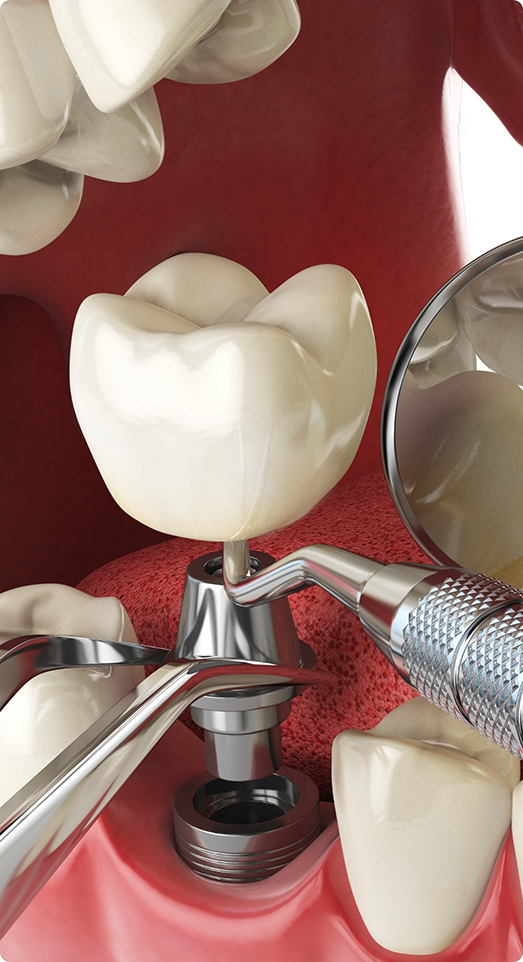
Rebuilding your smile requires four simple steps: the initial consultation, dental implant surgery, osseointegration and abutment placement, and the delivery of your final restoration. Although the process is long and requires much patience on your part, you can expect our team to be with you from beginning to end.
The four-step process includes:
- Initial Consultation: Dr. Kovar will discuss your candidacy for dental implants by examining your oral and overall health as well as your jawbone. Based on his findings, you will either be referred to a local implant specialist for surgery or prepared for additional treatment should gum disease, tooth decay, or bone grafting be required.
- Dental Implant Surgery: Placing your dental implants will require the help of a trusted, local implant specialist who will administer anesthesia before surgically positioning each post into your jawbone.
- Osseointegration/Abutment: Once healing caps are placed over the surgical sites, you’ll spend the next 4-6 months allowing osseointegration to occur, which is the fusing of your dental implants to the jawbone. When fully healed, you will receive small metal abutments, which will fit over the posts to help hold your restoration in place.
- Delivery of the Final Restoration: Before you can begin to enjoy your new smile, we will affix your crown, bridge, or denture to your implant posts. With a final polish and examination, you’ll be free to begin living life with a fully restored, functional, and beautiful set of teeth.
Benefits of Dental Implants
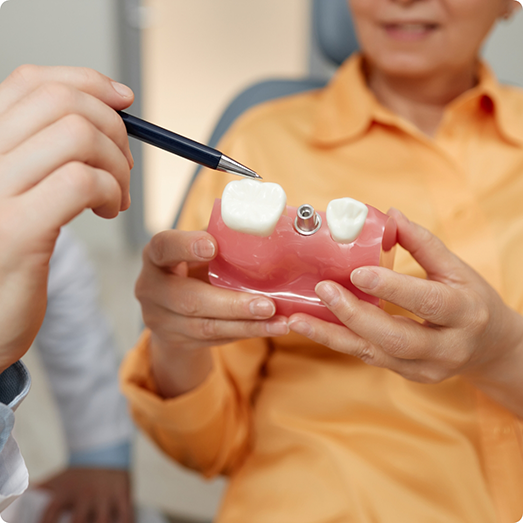
Millions of people in the United States are living with dental implants and enjoying their many benefits. From their 30+-year lifespan to their durability that allows for a stronger bite force and, in turn, a more nutrient-rich diet, it’s easy to see why they’re worth the investment. Not only are they a great value because of how long they last and their minimal maintenance, but they also reduce your chances of spending money on systemic issues that are commonly linked to tooth loss, such as osteoporosis, diabetes, and cardiovascular disease.
Who Dental Implants Can Help
Dental implants can be a suitable option for most people who are missing teeth. While a scheduled consultation is required as well as a thorough oral examination, our team can prepare your smile for success even if it’s not quite ready for surgery. We’ll go over the details of your plan and determine how many implants you will need as well as the type of restoration that’s required to restore your smile.
Missing One Tooth
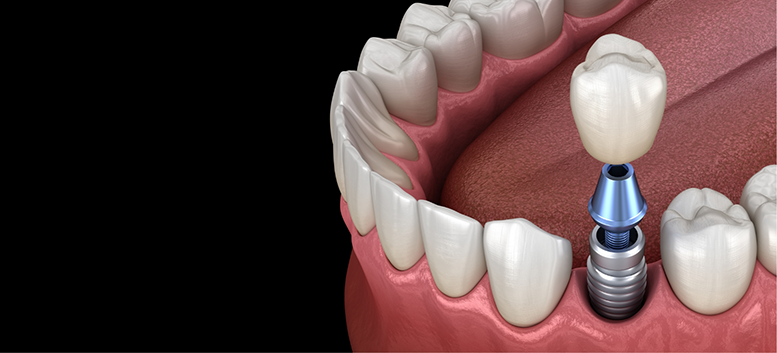
A single missing tooth can be easily replaced with one dental implant post and a custom-made dental crown. Although you will need to wait several months before your restoration can be secured in place, you can expect to enjoy the look of a complete smile as well as the heightened confidence that comes with it.
Missing Several Teeth
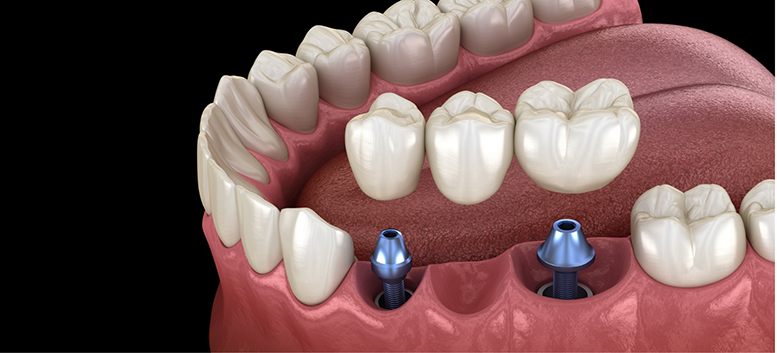
When missing two or more teeth in a row, we can prepare your smile for an implant bridge. Unlike a more traditional prosthetic that requires altering healthy abutment teeth to anchor it in place, an implant bridge is attached to two dental implants that are positioned on the ends of the gap. What you’re left with is a fully secure set of teeth that allow for easier eating and speaking.
Missing All Teeth
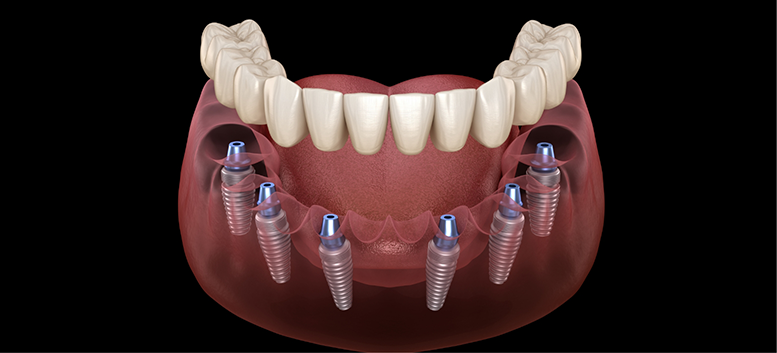
An entire row of missing teeth can be restored using implant dentures or All-On-4. With regular implants, we can use between four and six posts to stabilize a custom-made denture that does not require removal. If you lack the jawbone density required to support this type of prosthetic, we can recommend All-On-4. This option uses only four implant posts that are placed in the dense parts of the jawbone for maximum durability.
Maintaining & Caring for Your Dental Implants

After investing your valuable time and money in dental implants in Fredericksburg, it’s only natural to want them to last. Fortunately, they have a success rate of over 95% for non-smoking patients, and you can keep them in pristine condition for 30+ years with proper maintenance. More specifically, we recommend:
Make Oral Hygiene a Priority

All too often, patients assume that they don’t need to brush and floss consistently anymore. After all, dental implants can’t decay, right? While that is true, the gums that are supporting your restoration can develop an infection. Plus, any remaining natural teeth you have will decay if they are neglected. So, it’s very important that you prioritize healthy habits, like rinsing with an antimicrobial mouthwash for 30-60 seconds each morning or evening.
Eat a Healthy Diet

Simply put, you should eat healthy, well-balanced meals while also limiting your intake of sugary treats and exercising caution with crunchy foods. Not only will this ensure that your body has the vitamins, minerals, and nutrients it needs, but it will also reduce your risk of sustaining dental damage, like a cracked restoration.
Tip: Drink plenty of water throughout the day! This will help you stay hydrated, prevent dry mouth, and prevent food particles from lingering on your teeth.
Break Bad Habits

Like your natural teeth, your dental implants can break with enough pressure. That’s why we recommend breaking harmful habits, like biting your nails. You should also avoid tobacco products since patients who smoke have an increased risk of experiencing dental implant failure.
Protect Your Dental Implants

Do you enjoy starting your morning with a run? Maybe you prefer to lift weights, ride your bike, or play tennis with your friends. Whatever the case is, it’s important to wear a mouthguard. That way, your teeth, your gums, and your dental implants are protected from unexpected impact, like a rogue tennis ball.
Important reminder: One-size-fits-all mouthguards can be uncomfortable and ineffective. So, if you don’t have a mouthguard already, we recommend scheduling an appointment at our office so we can have a custom one made for you.
Schedule Regular Dental Checkups
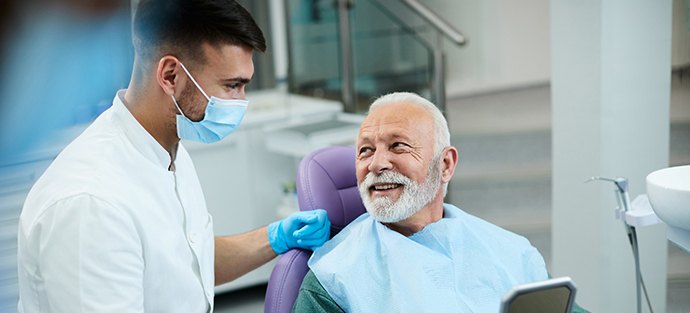
Lastly, you need to schedule an appointment with our Fredericksburg dental team every six months. These routine visits serve several important purposes, starting with the fact that they increase the likelihood of us being able to catch oral cancer in the early stages. So, even if you don’t have any of your natural teeth left, it’s important to prioritize your biannual visits.